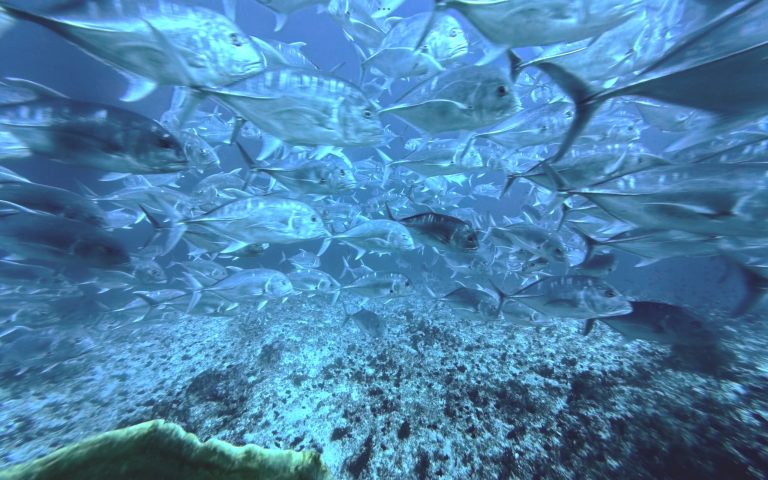
One of the ways that reefs recover from disturbance is when coral larvae settle, attach, and grow into new colonies. Yet coral settlement remains understudied in the Western Indian Ocean, where the 2024 global bleaching event affected 96% of reefs. A new Master’s thesis by former Blue Alliance intern Dominique Nurse-Allen provides a detailed picture of where and when corals are settling in the Pemba Channel Conservation Area (PECCA), Zanzibar.
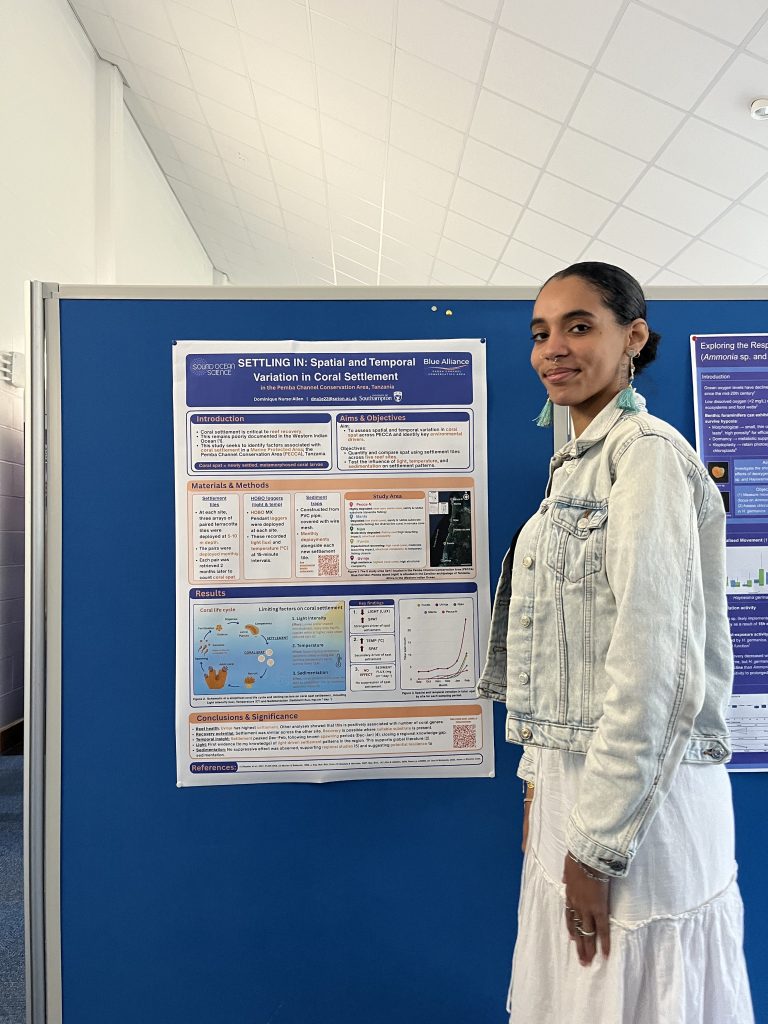
Dominique’s thesis, Environmental and benthic drivers of coral recruitment in the Pemba Channel Conservation Area (PECCA), Tanzania, was completed for a Master of Marine Biology with Oceanography at University of Southampton, supervised by Dr Cecilia D’Angelo.
The study draws on the first eight months (July 2025 – February 2026) of an ongoing monitoring programme run by Blue Alliance PECCA and Sound Ocean Science in the PECCA Blue Corridor, the northern section of the conservation area that Blue Alliance has co-managed with the Ministry of Blue Economy and Fisheries since August 2023.
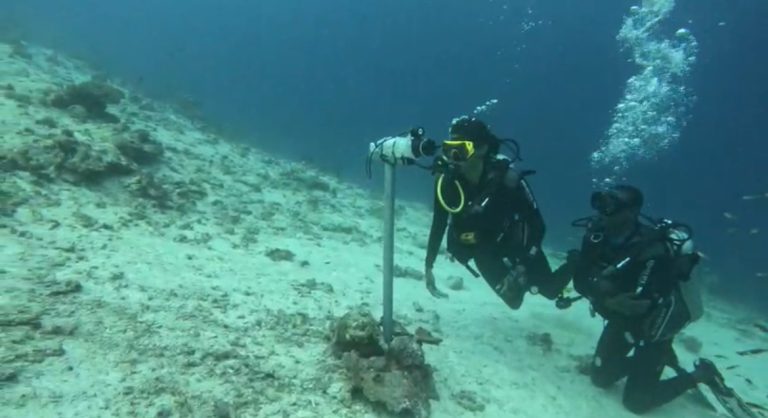
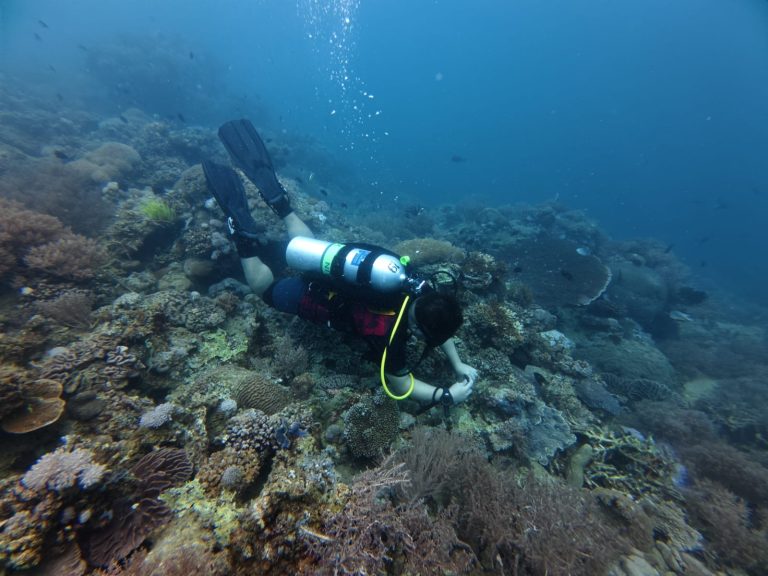
At five shallow reef sites (Pecca-N, Manta, Njao, Fundo and Uvinje), the field team deployed:
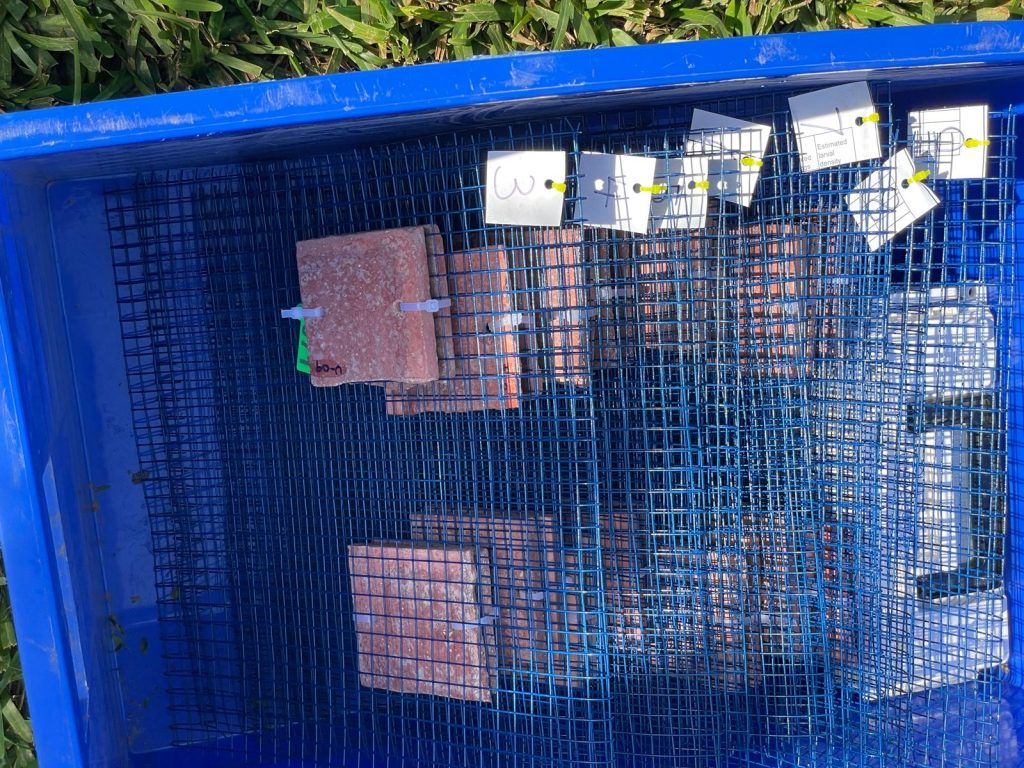
- 15 arrays of terracotta settlement tiles, retrieved every two months and examined under a microscope for newly settled corals (spat)
- Sediment traps, collected monthly
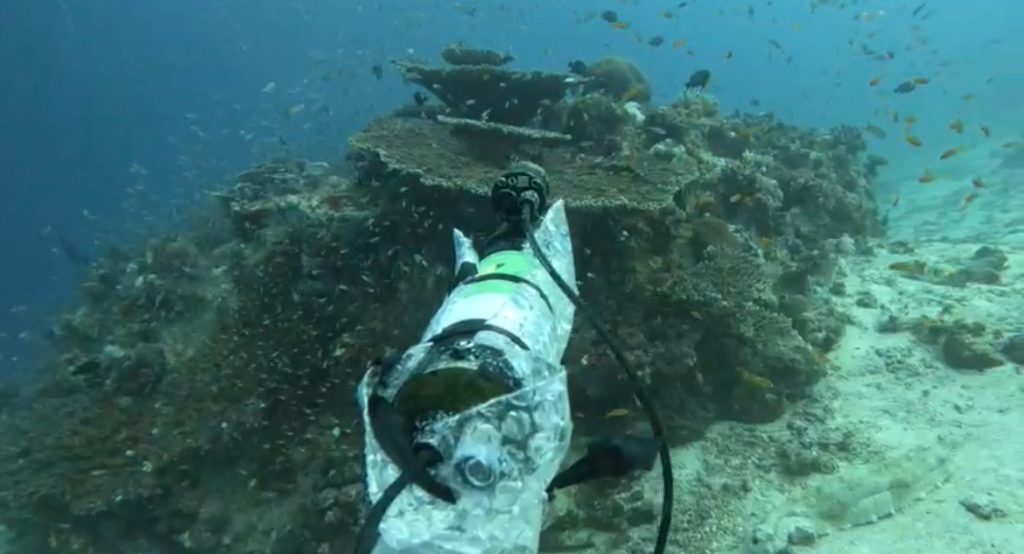
- Loggers recording temperature and light every 15 minutes
Dominique analysed the tile communities, coral spat counts and environmental data to identify what drives settlement across the corridor.
What she found
- Uvinje, the southernmost site, had significantly higher spat density than the northernmost site and was the only site where corals were settling from the start of monitoring in September 2025. Other sites recorded no settlement until December 2025 or later.
- Settlement peaked at all five sites in February 2026. Water temperature rose from an average of 26.5°C to 28.0°C over the study, and the peak coincided with the northeast monsoon, when weaker currents and eddies in the Pemba Channel are thought to retain larvae locally.
- Of the factors measured, lower ambient light was the strongest predictor of settlement. On the tiles themselves, the most settlement occurred on the outer face of downward-facing tiles, a partly shaded surface that still receives water flow.
- Sediment levels varied widely, peaking at Pecca-N in January, but did not suppress settlement at current levels. The thesis recommends continued monitoring, as sediment can still affect the longer-term survival of young corals.
- Corals settled even at Pecca-N, which lost almost all its coral cover and bears the scars of past dynamite fishing.
How this informs management
The findings point to the southern Blue Corridor as the area with the strongest current recruitment potential, and to Uvinje as a priority for enhanced protection and monitoring. At degraded rubble sites such as Pecca-N, the thesis notes that unstable substrate, rather than a lack of larvae, can limit recovery, making rubble stabilisation a possible intervention to explore.
The results are preliminary. They cover eight months, and the full 18-month dataset will show whether these patterns hold at least across seasons.
Research such as this is invaluable and allows us to make informed management decisions. Thank you for your dedication, Dominique and congratulations on a stand out thesis!

“Regenerating the ocean at Scale – For People and Nature.”