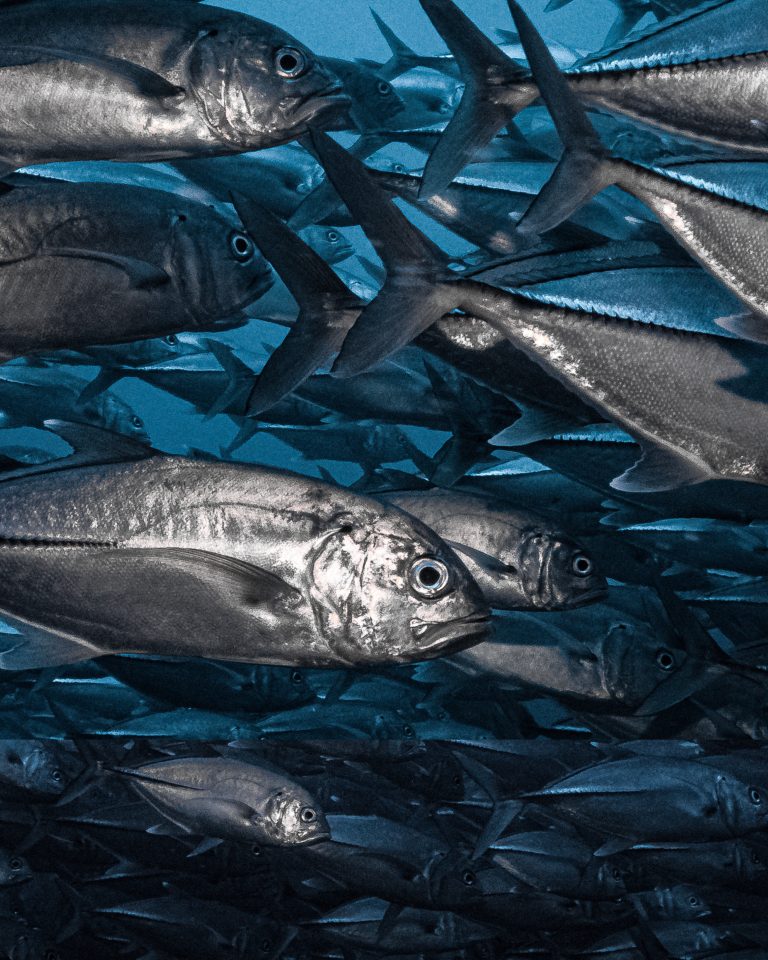
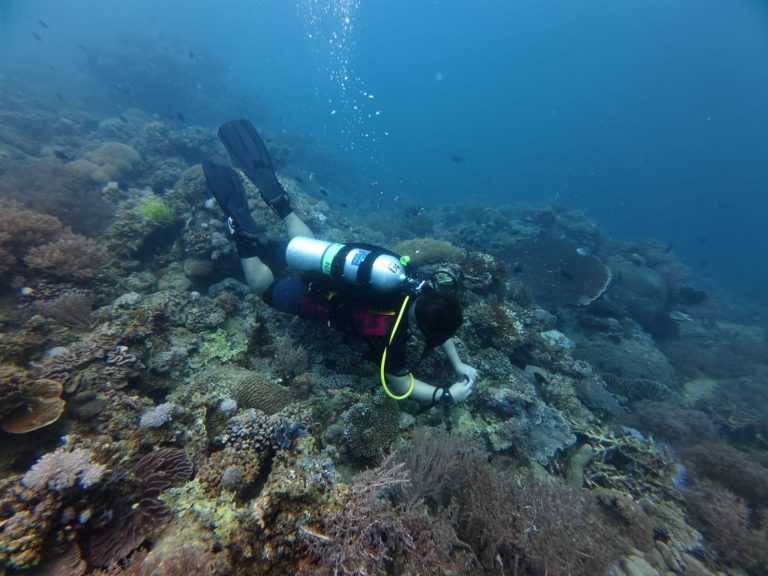
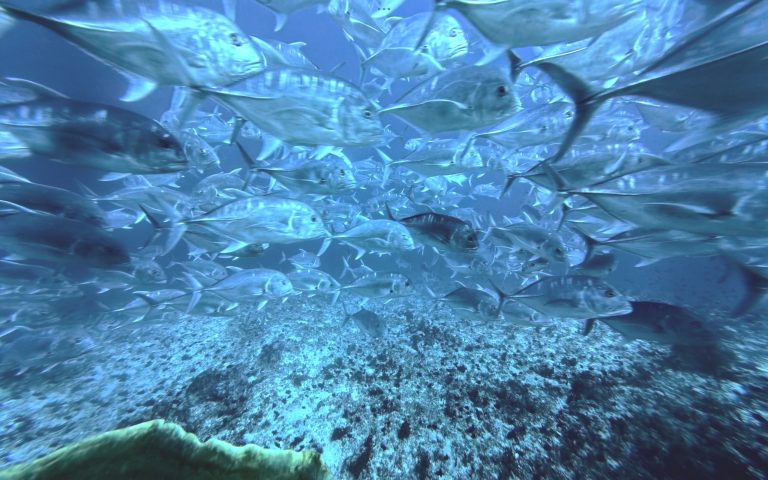
There is a moment on almost every dive when Francis Tagnong stops finning and simply hangs in the water. The reef goes quiet apart from the sound of his own breathing. Light comes down in shifting bars, and a school of fish drifts past as if he is not there.
Francis has spent years working with coral and sponge specimens and has dived to mesophotic depths for research. Still, in that stillness, he feels like a beginner.
“The ocean is both completely familiar and completely unknown to me,” he says. “Every time I’m underwater, there’s still this feeling that there’s so much more that I don’t understand.”
Today, Francis is the Advocacy and Communications Officer for Blue Alliance Philippines in Puerto Galera. The municipality sits at the southern entrance to the Verde Island Passage, one of the most biodiverse marine corridors on the planet, where Blue Alliance supports the management of the local Marine Protected Area (MPA) Network. For Francis, the deeper he has gone into marine conservation, the clearer one lesson has become.
“Loving the ocean is the easy part. The hard part is getting other people to love it too, and that is the part of my work I value most.”
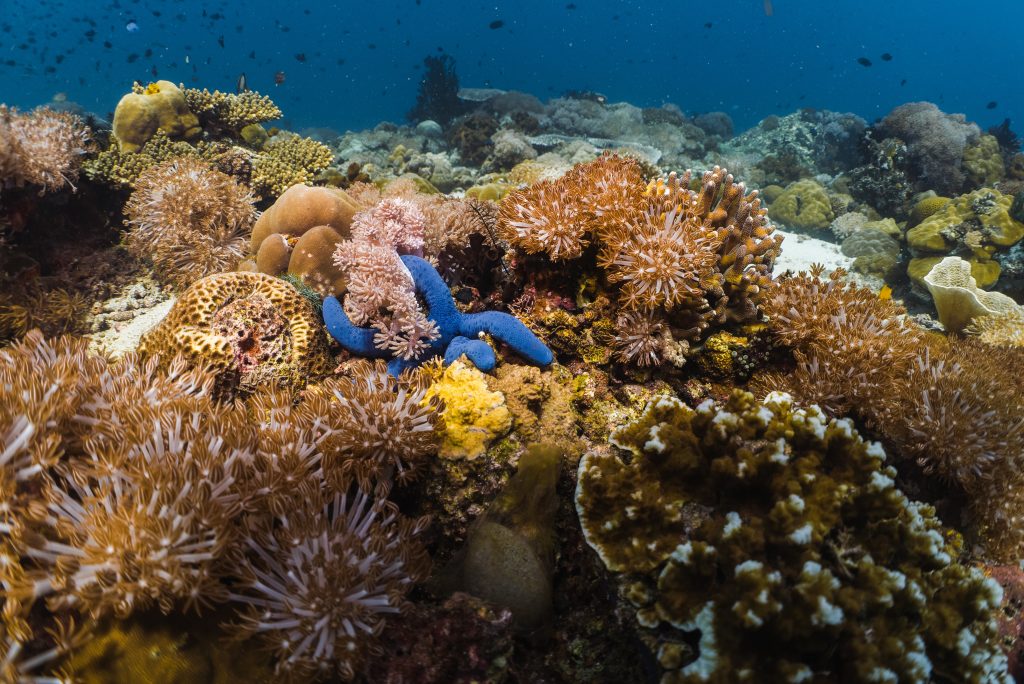
Two Toolkits
Francis’s path was not a straight line, but looking back, each step set up the next. He studied Fisheries at the University of the Philippines, which gave him his grounding in marine science and his first real exposure to coastal communities and the realities of fisheries. Alongside his degree, he threw himself into student organisations, student governance, and external environmental groups. Without realising it, he was building a second toolkit: communication, leadership, and the ability to work with all kinds of people.
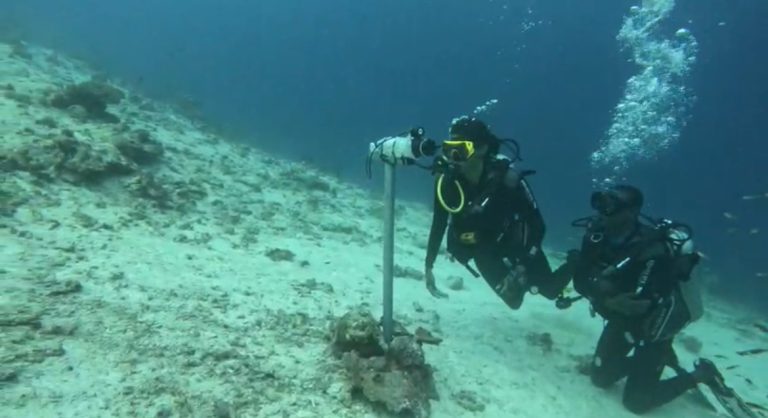
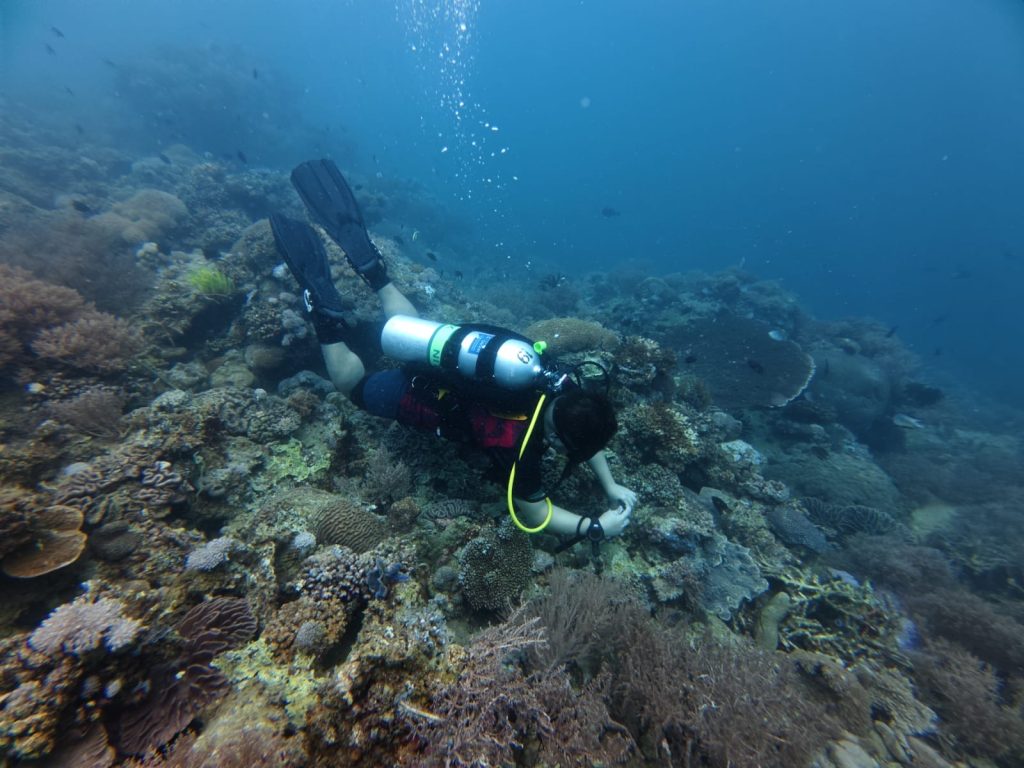
After graduating, he became a research associate at the UP Marine Science Institute, carrying out molecular work on coral and sponge specimens, analysing sequence data, and collecting samples in the field. That fieldwork took him beyond 30 metres at sites across the Philippines, including Bohol, Batangas, Pangasinan, and Apo Reef Natural Park. At that depth, the light turns blue and dim, colours fade, and the surface feels very far away. There is no room for wandering. Time and equipment are managed carefully, and every sample collected is destined for the laboratory.
Francis loved the work with one moment sticking with him to this day:
“I remember sitting with a finished dataset, thinking: this is real, this matters, and almost nobody who needs to know it will ever read it.”
A paper can describe exactly what is happening to a reef. The harder question is how that knowledge reaches the communities living beside it, the policymakers who govern it, and the people whose choices shape it. That gap between knowing and doing is what drew him to Blue Alliance.
“It did not feel like leaving science behind. It felt like putting the two halves of my background to work together.”

More Than a Line on a Map
On paper, Francis works in communications and advocacy. In practice, he is also a translator, a project coordinator, and, as he puts it, “sometimes the person who figures out how to get twelve people to agree on a date.”
His favourite part of the job is giving BlueTalks at partner resorts in Puerto Galera, where he speaks with guests, resort staff, and other stakeholders about MPAs: why they exist, why they matter, and how responsible tourism keeps these places healthy.
“Many people arrive thinking an MPA is a line on a map or a list of things they are not allowed to do. I want them to leave seeing it as a tool for protecting marine ecosystems and the communities and livelihoods that depend on them.”
Each talk is shaped for its audience, whether children, adults, or dive professionals. None of them is a one-way lecture. Someone at the back will raise a hand with a question he did not plan for: whether the reef they have been diving all week is really protected, or why the rules are the way they are. Those questions, and the occasional misconception, tell him how people actually see marine conservation.

No Typical Day
Coffee comes first, always. After that, a day might mean messages, partner check-ins, project timelines, or communications materials. Other days focus on the field and the projects behind it: coordinating monitoring for a coral growth project with an international academic institution, organising logistics for a locally led event, and following up with stakeholders across government, communities, donors, civil society, academia, and the tourism sector.
“I can spend a morning helping write technical project documents and an evening talking about MPAs with resort guests. It is a strange mix, but it keeps the work interesting.”
Francis also helps track Blue Alliance’s metrics, documenting progress and outcomes across its activities. The experience has sharpened his view of the work: conservation is not only about doing, but about being able to measure what has been done.
The Moment It Lands
Francis is proudest when something technical and abstract becomes real to another person. Explained in technical terms, MPAs can sound like paperwork. Explained well, they become something people care about.
“You can see the moment it lands: a nod, a pause, someone leaning over to whisper to the person next to them. Above all, I feel proudest when people ask question after question.”
Translator and Connector
Conservation brings together people who want very different things. A scientist may care most about the quality of a dataset. A government agency may focus on enforcement. A donor wants measurable outcomes. A resort thinks about its guests and its business. A fisher thinks first about livelihood and access to resources.
“Each of them is right from where they stand, and that is exactly what makes it hard.”
Rather than pushing a single viewpoint, Francis works to understand what matters to each group and to find where their interests overlap. In his talks, that means connecting MPAs to what an audience already knows and values: diving, the condition of the reef, the guest experience, or the long-term future of the place a business depends on. His science background keeps him accurate; his communications experience makes the science something people can engage with.
Fieldwork taught him adaptability, too. “On the harder days, I remind myself that a single conversation that shifts how someone thinks is still progress.”
Looking Ahead
For 2027, Francis wants to make Blue Alliance’s work more tangible, showing not only that activities took place, but that something changed because of them. Counting activities and people reached tells only part of the story, and he has begun teaching himself how to measure shifts in behaviour and livelihoods.
One question guides him: “How do we move from telling people that MPAs are important to helping them truly understand their value, and eventually become advocates themselves?”
His hope is to one day hear a resort guest give the talk themselves, somewhere else. It is a fitting ambition for someone whose work sits where science, communications, tourism, and conservation meet, and whose role is to help people see the ocean not only as something to enjoy, but as something worth protecting, in line with Blue Alliance’s mission: Regenerating the ocean at scale, for people and nature.

“Regenerating the ocean at Scale – For People and Nature.”