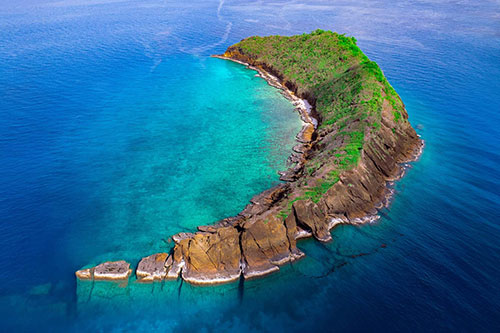
On the shores of Pemba, Zanzibar, fishers return each morning with their catch. Children play along the coastline. Life moves to the rhythm of the tide. And Sabrina Adam works tirelessly to fulfil one of the often-overlooked aspects of scientific monitoring: data management.
Before the field teams have dried off from their morning surveys, Sabrina is already at work organising data from coral reef transects, entering fisher interviews into databases, and ensuring that every observation collected across the Pemba Channel Conservation Area (PECCA) is accurate, structured, and ready to inform the decisions that protect it.
A Pemba Girl Who Never Left the Ocean Behind
Sabrina grew up on Pemba Island, surrounded by communities whose lives have always been shaped by the sea. She watched neighbours depend on it for food and income and she saw how the ocean was inextricably woven into the lives of her community, herself included.
That connection deepened when she pursued Marine Science at university, drawn by a growing interest in how research and information could support the protection of the ecosystems she had grown up alongside. After graduating, she found her way to Blue Alliance and to a role that placed her at the intersection of science, data, and community.
“To me the ocean represents life, identity, and responsibility,” she says. “Through my work, I have come to understand how important it is to protect marine ecosystems not only for nature itself, but for the people whose lives depend on it.”

The Role No One Sees
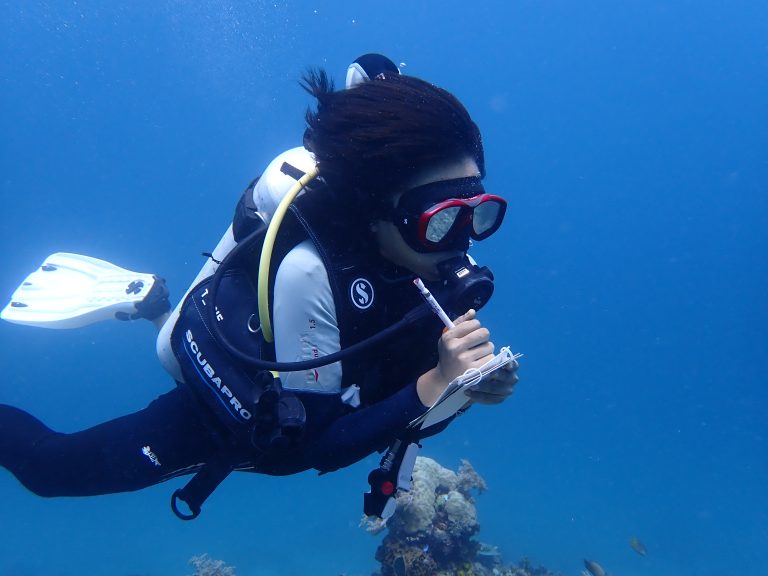
Sabrina works as a Data Manager within Blue Alliance’s science and conservation team in Pemba. On any given week, Sabrina may be out on a boat heading to a fish landing site before sunrise, conducting fisher interviews, supporting coral reef surveys, or checking sea turtle nests on a remote beach. She is as likely to be actively engaging in fieldwork as she is seated at a desk managing a database.
She manages CPUE fisheries data, organises sea turtle monitoring records, and supports fisher interviews about spawning aggregation sites for groupers and snappers. She maintains the databases used for conservation planning and reporting. Sabrina ensures data is accurate, structured, and ready to guide management decisions.
“Every piece of information we work with is connected to the health of the ocean and the future of coastal communities,” she says.
The Moment That Made It Real
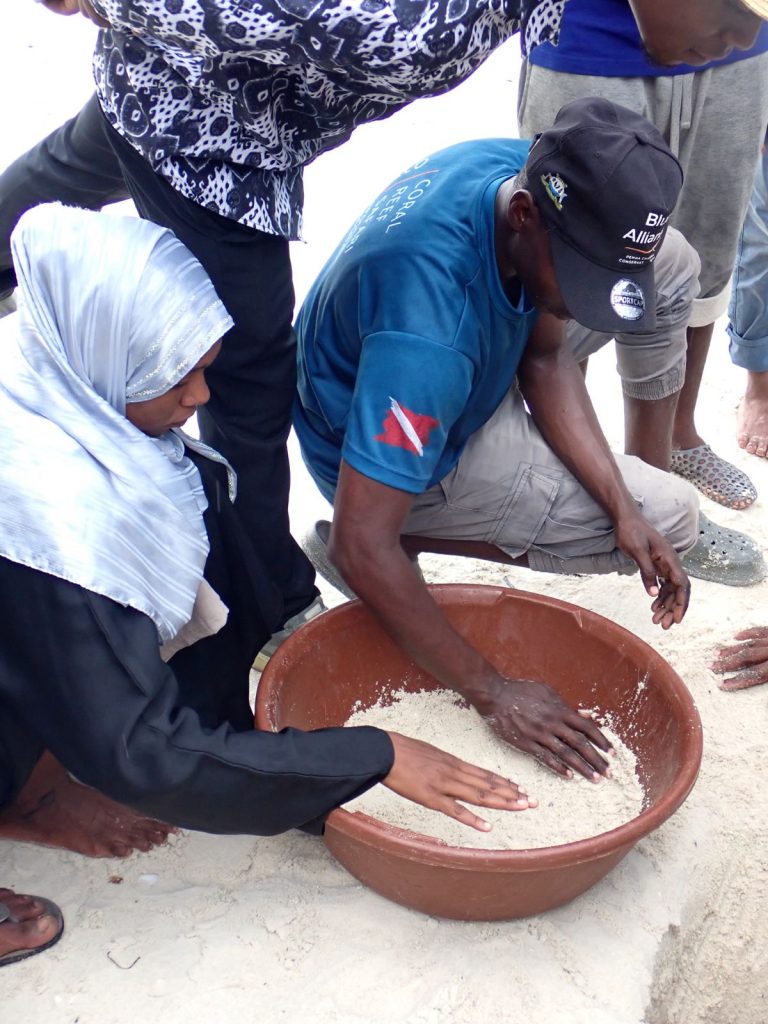
Ask Sabrina about a moment that has stayed with her, and she does not hesitate. During sea turtle nest monitoring activities, she followed the full arc of the process, locating tracks on the beach at night, identifying and protecting nests, and waiting through the incubation period.
Watching the eggs hatch and the hatchlings cross the sand to reach the water for the first time, Sabrina felt the weight and purpose of work that usually takes place behind a screen.
“It reminded me how important conservation work is,” she reflects, “and how every small effort contributes to protecting marine life.”

No Two Days Look the Same
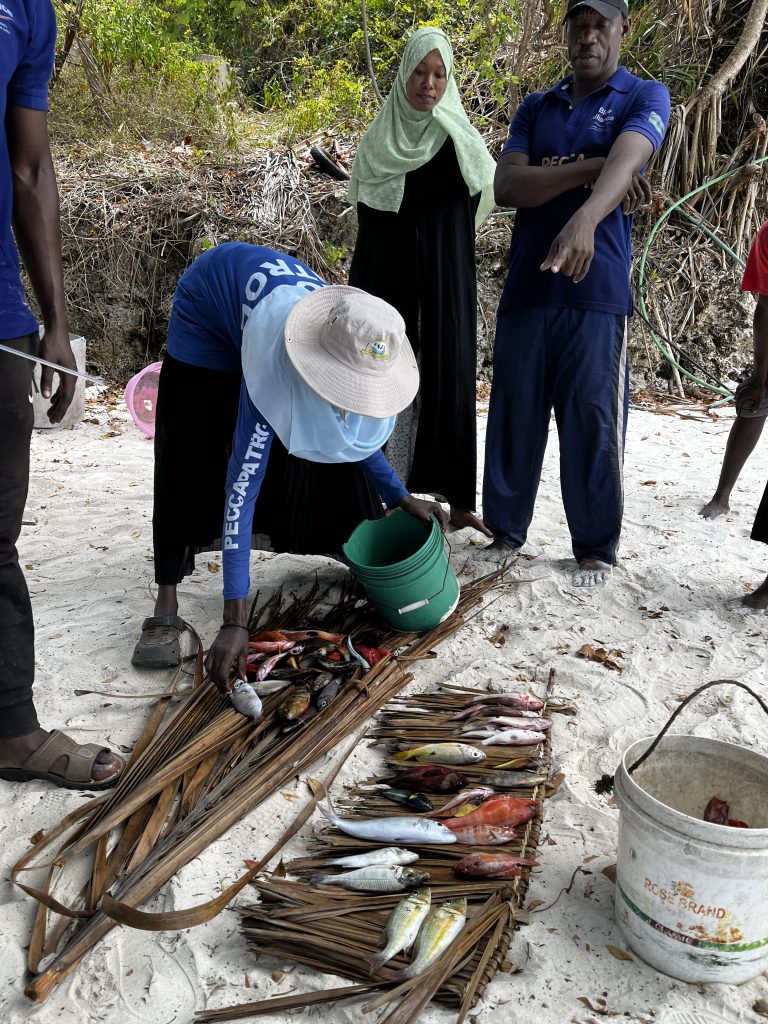
When field activities are scheduled, Sabrina’s days start early. Boats travel to fishing villages and nesting beaches while the sky is still dark. Some mornings are spent at fish landing sites, recording catches and interviewing fishers. Others involve checking sea turtle nests or supporting underwater monitoring surveys.
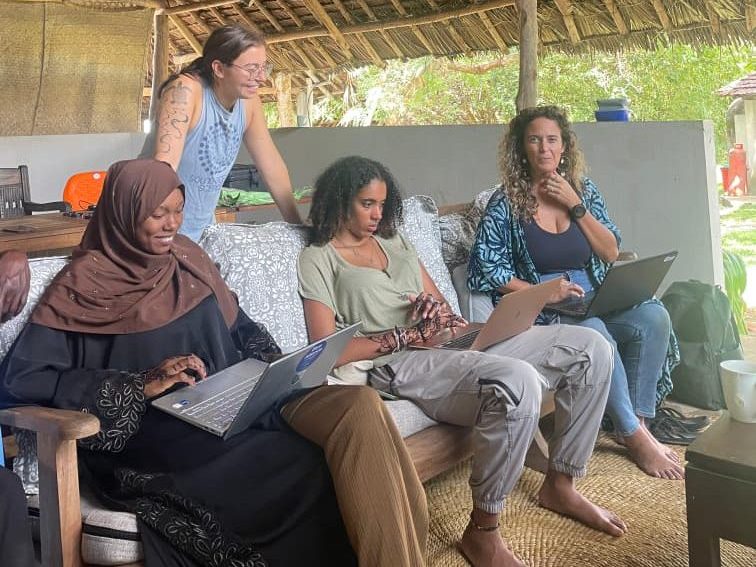
When fieldwork ends, the data work begins. Sabrina enters records, reviews for consistency, prepares reports, and discusses findings with the team. Sabrina’s job is variable, no two days look the same.
“Every day is different,” she says. “And that makes the work exciting.”


When Community Knowledge Becomes Data
Sabrina’s work is conservation in practice. When she supports interviews with fishers about spawning aggregation sites, she is not just collecting coordinates. She is documenting knowledge passed down through generations, such as where groupers and snappers gather to reproduce, and when.
That knowledge, once recorded and validated, becomes part of the scientific record. It shapes where protection is prioritised and how management plans are written. Generational knowledge becomes part of the effective, community-centred management of Marine Protected Areas through Sabrina’s data capture. This is significant because it ensures that the people who have long known this ocean are not left out of the effort to protect it.
“It shows the importance of listening to local experiences and combining them with scientific information,” she says.

Still Learning, Still Growing
Sabrina is straightforward about the challenges her role brings. Managing data across multiple sources, formats, and field activities is complex. Ensuring consistency and accuracy across datasets takes discipline and when mistakes happen, they must be found and corrected before they compound.
Sabrina focuses on a deliberate approach: ask questions, practise regularly, and treat every error as a lesson.
“Challenges in data management are part of the learning process,” she says. “They motivate me to keep improving.”
Over time, that process has built both capability and confidence. She is growing, she says, into someone who truly understands the value of good data for conservation and what it takes to produce it.
What Comes Next
In 2026, Sabrina plans to begin a master’s degree, a step that will deepen her technical skills and expand her contribution to conservation work in Pemba and beyond.
She is still early in her career. But in a field where the quality of decisions depends entirely on the quality of information, the work she does every day truly matters.
Blue Alliance’s vision to regenerating oceans at scale — for people and nature is made possible through an intersectional approach and scientific monitoring is one of the key pillars of this approach. We rely on people like Sabrina to keep our data quality on point.

“Regenerating the ocean at Scale – For People and Nature.”