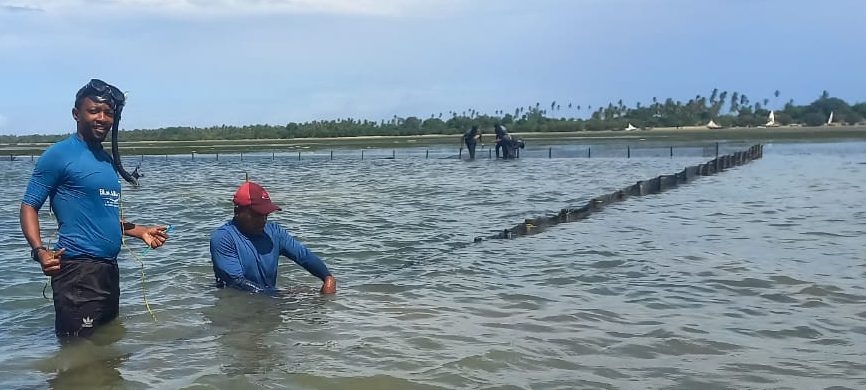
Morning comes early to the shallow waters off Pemba Island, Zanzibar. While the tide is still low and the sun is climbing, Said Juma is already wading out to inspect the rows of sea cucumber pens that sit just beneath the surface.
Said is the Farm Manager at Aquahub Zanzibar Ltd. Ask him why he does this work and his answer comes quickly and easily.
“I love sea cucumber production and farming,” he says.
For Said, it really is that simple. This is the work he loves, the work he is proud of, and the work he has built a life around.
Today, Aquahub spans three sites across Pemba: a hatchery at Pujini, a nursery at Mkia wa N’gombe, and a grow-out farm at Vumawimbi. With them stands a cooperative of 68 community farmers, the people this industry is being built with, and for.
From Hatchery to Farm
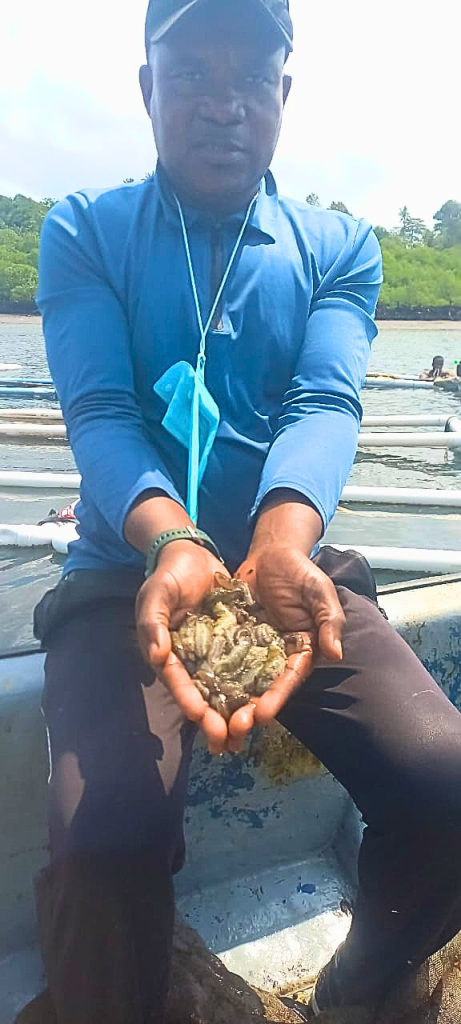
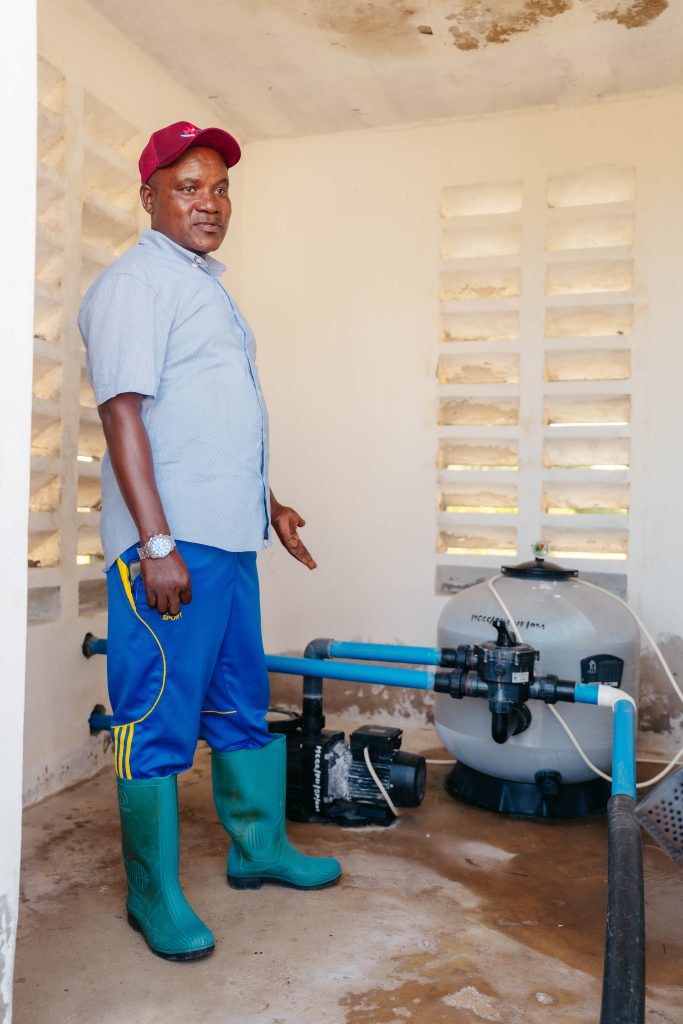
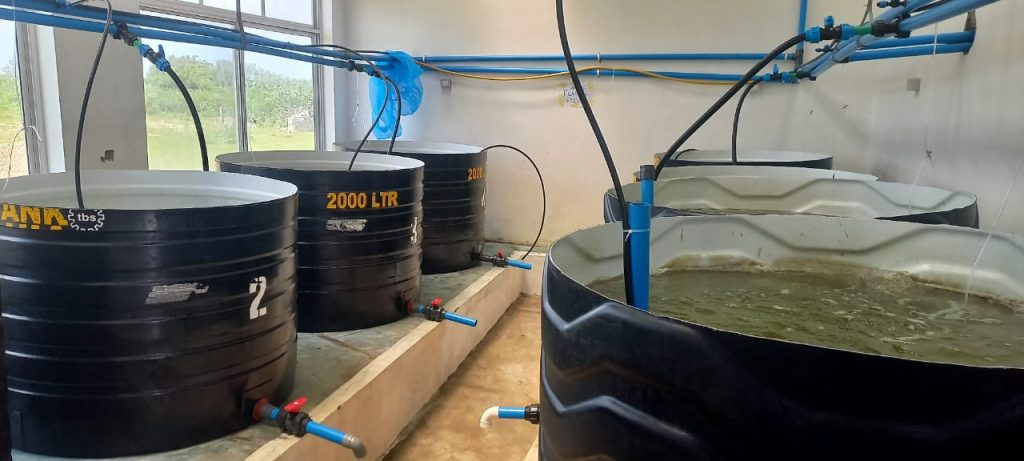
Said’s story begins not in the tidal hapas, but in the hatchery at Pujini. For many years, he managed sea cucumber hatchery production, raising juveniles through their earliest and most fragile stages of life. It is patient, delicate work. A hatchery manager learns to notice the smallest things: how the animals grow, what they need to survive. Few people on Pemba know sea cucumbers the way Said does.
That knowledge is exactly why, when the operation needed someone to lead the farming side, Said was chosen. He describes the move as shifting to “the other side of the coin”. Everything he had learned raising juveniles indoors, he now carries into the open water, growing his own career, the farms, and supporting his community at the same time.
A Day in the Water
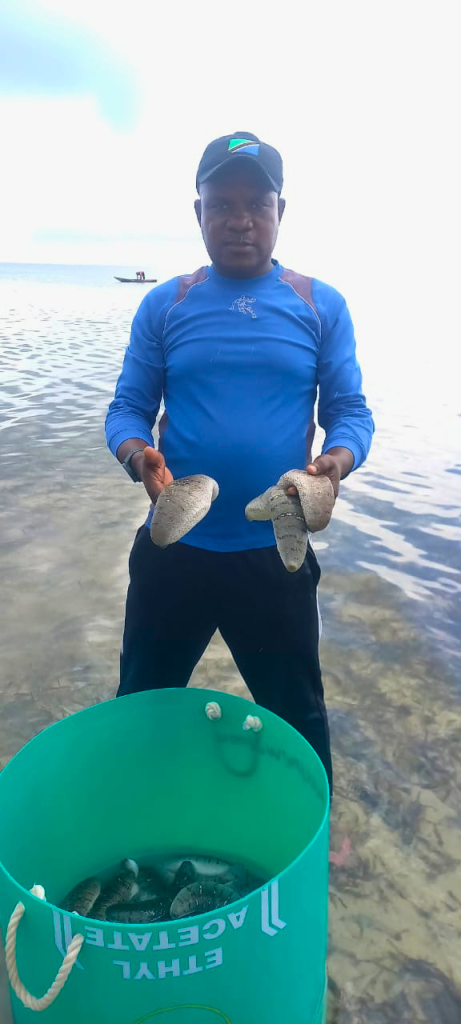
Said’s days are long, physical, and lived mostly in the sea. From early morning to late afternoon he is in the water: building and repairing pens, constructing the nursery hapas where young sea cucumbers grow until they are large enough for the farm, and checking on juveniles and breeders at both the nursery in Mkia wa N’gombe and the farm site at Vumawimbi.
There is always a pen to fix, juveniles to check on, a stretch of farm to inspect. Construction and monitoring, day after day, tide after tide. It is demanding work, and it is exactly where Said wants to be.

Pride You Can See from the Shore
Ask Said what makes him proudest and the answer comes in two parts.
The first is a skill: the ability to successfully produce sea cucumber juveniles at hatchery level, something that takes years to master.
The second is something he can point to. Look out across the water and you will see hectares of sea cucumber farms, pen after pen, built by Said and his team. Most people’s proudest work sits in a report or on a shelf. Said’s is visible on the tidal flats.
A Farm That Belongs to the Community
The pens Said builds are not just infrastructure. They are the foundation of a new livelihood for Pemba’s coastal community.
Through Aquahub’s grow-out programme, a cooperative of 68 community farmers is being supported to farm sea cucumbers, placing local producer groups at the front of an industry that is only just beginning. The model is spreading, community agreements have been signed, and farm construction has begun in Fundo, bringing a new village into the work.
The value chain starts in the hands of Pemba’s own farmers.

A Year of Milestones
2026 has already shown what this operation can do. At the Pujini hatchery, while the year began with setbacks, including poor egg quality and high larval mortality, the team refined its techniques run by run, and by May the hatchery passed a major milestone: over 1 million sea cucumber eggs produced in a single month. Foundations for a brand-new hatchery have been laid at Pujini.
At Mkia wa N’gombe, the nursery has expanded from 11 acclimatization pens to include 50 additional hapas. By May, 8,300 juveniles had been stocked, with a further 20,000 expected imminently.
And at Vumawimbi, the moment the whole chain has been building towards: the first sea cucumbers were stocked into Said’s grow-out pens in May, with preparations underway to expand.
Said’s hopes for the rest of the year to mirror the two halves of his career. He wants to see hatchery juvenile production keep improving. And he wants to see the farms keep growing, hectare by hectare, pen by pen, farmer by farmer.
It is a fitting ambition for a man whose story is written in the structures he has built beneath the water. Every juvenile raised and every farm constructed is a step towards a blue economy that sustains Pemba’s coastal communities, and towards Blue Alliance’s mission: Regenerating the ocean at scale, for people and nature.
“Regenerating the ocean at Scale – For People and Nature.”